

Premier Boat Oxidation Removal & Gelcoat Restoration in Austin, TX
Oxidation gradually robs your boat of its depth, color, and shine, leaving the gelcoat looking dull, chalky, and weathered. It's a natural result of prolonged exposure to UV rays, water, and the elements. At Pearlwerx, our professional oxidation removal process restores clarity and gloss while bringing new life back to your gelcoat, leaving your boat looking cleaner, brighter, and better protected.
(3)_mov.jpg)

« RESTORE A CLEANER, GLOSSIER FINISH
A Targeted Process for Boats Dealing with Oxidation and Surface Fading
Oxidation doesn’t just happen all at once, it builds gradually from constant UV exposure, lake water, and environmental containments, leaving your gelcoat looking dull, chalky, and uneven. At a certain point, a wash or basic detail won’t bring the finish back.
That’s where oxidation removal comes in. This is a correction-focused process designed to remove that faded surface layer and reveal the healthier gelcoat underneath. Depending on the condition of your boat, we use a combination of compounding, polishing, and when needed, sanding to improve clarity and restore a smoother, more reflective finish.

« PRICING
Marine Oxidation Removal & Gelcoat Restoration
Oxidation can range from light surface dullness to more advanced gelcoat degradation, and the level of correction needed varies from vessel to vessel. Because of this, oxidation removal is quoted individually following an evaluation of your boat’s condition.
We start by carefully evaluating the condition of the gelcoat before deciding how far the correction process needs to go. A test spot helps us see how the surface responds and gives us a better sense of the oxidation level, gloss potential, and the safest way to move forward. This step matters because not every boat needs the same level of restoration, and we want the process to match the condition of the vessel rather than taking a one-size-fits-all approach.


« PREMIUM BOAT CARE
Benefits of Oxidation Removal for Boats
When oxidation takes over, the finish starts to look flat, faded, and washed out. Removing the damaged surface layer helps bring back more of the color, depth, and light reflection that made the gelcoat look sharp in the first place. For many boat owners, this is the point where the vessel starts to look properly cared for again instead of just cleaned up.
RESTORES LOST GLOSS AND COLOR CLARITY
A chalky surface can make even a well-maintained boat look older and more neglected than it really is. Oxidation removal improves that first impression in a big way by transforming the appearance of the finish, restoring a cleaner, clearer, and more uniform look. Whether your boat is at the dock, on the lift, or out on the water, the difference is usually easy to see once the oxidation has been corrected.
IMPROVES OVERALL APPEARANCE
Sealants and ceramic coatings work best when they are applied to surface that has already been properly corrected. If oxidation remains on the gelcoat, you are trying to protect a finish that is already breaking down. Removing oxidation first gives your next protection step a much better foundation and helps the final result hold up more effectively.
BETTER FOUNDATION FOR PROTECTION
Oxidation does not stay in one place. Once the surface starts to deteriorate, it generally continues unless it is corrected and protected. Addressing it earlier helps keep the gelcoat in better condition and can reduce the need for more aggressive correction later.
SLOWS FURTHER OXIDATION

Signs Your Gelcoat Needs Oxidation Removal
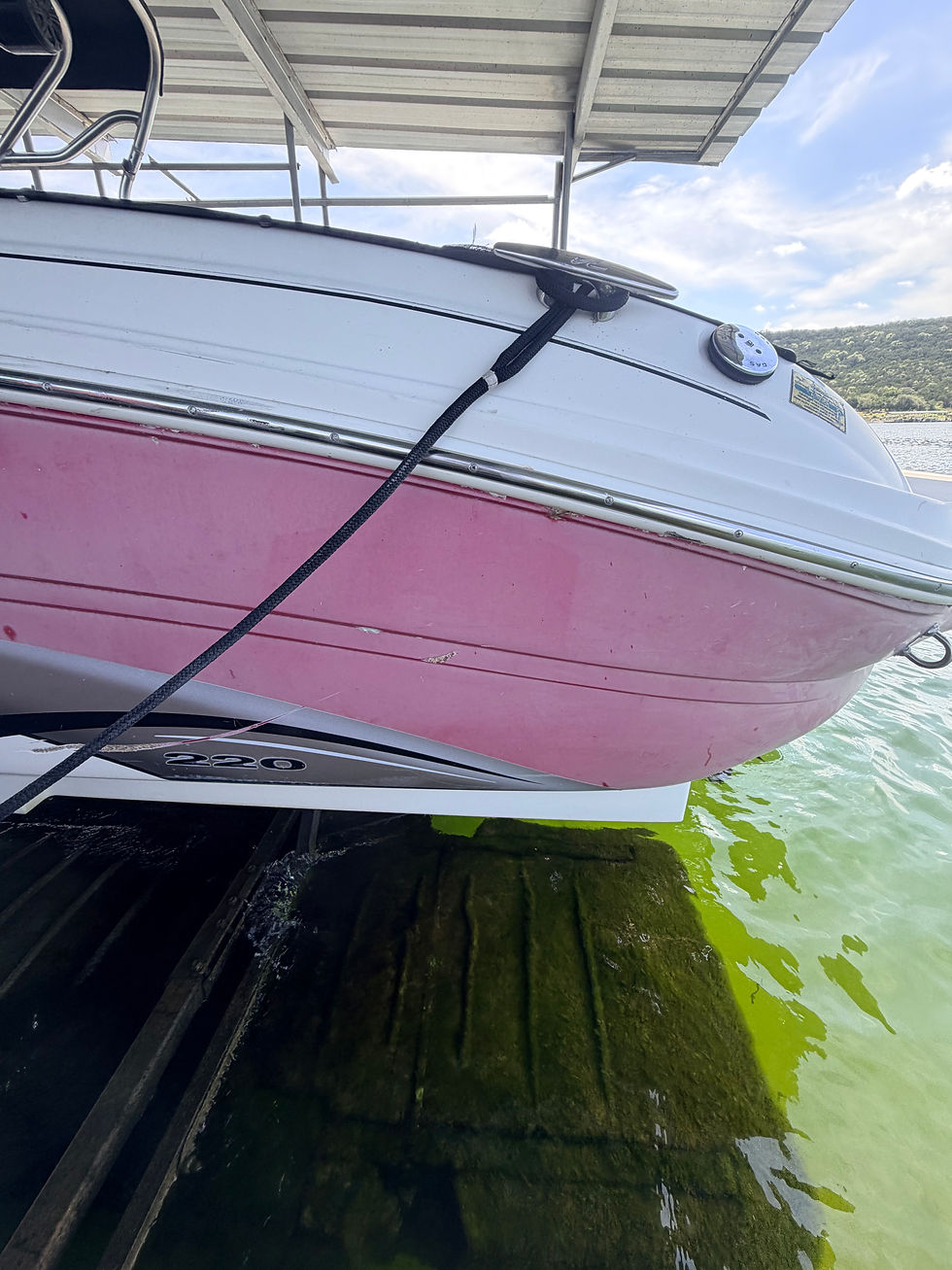
This is usually the clearest sign. If the surface has a dull, faded, almost powdery appearance, oxidation is already taking hold. A healthy finish should have some depth and smoothness to it, so when that starts to disappear, correction is usually the next step.

A lot of owners notice this before they can even describe what looks wrong visually. When you run your hand across the surface, and it feels dry, textured, or uneven, this is often a sign that oxidation and environmental buildup have changed the condition of the gelcoat. At that stage, regular washing alone will not restore the finish.
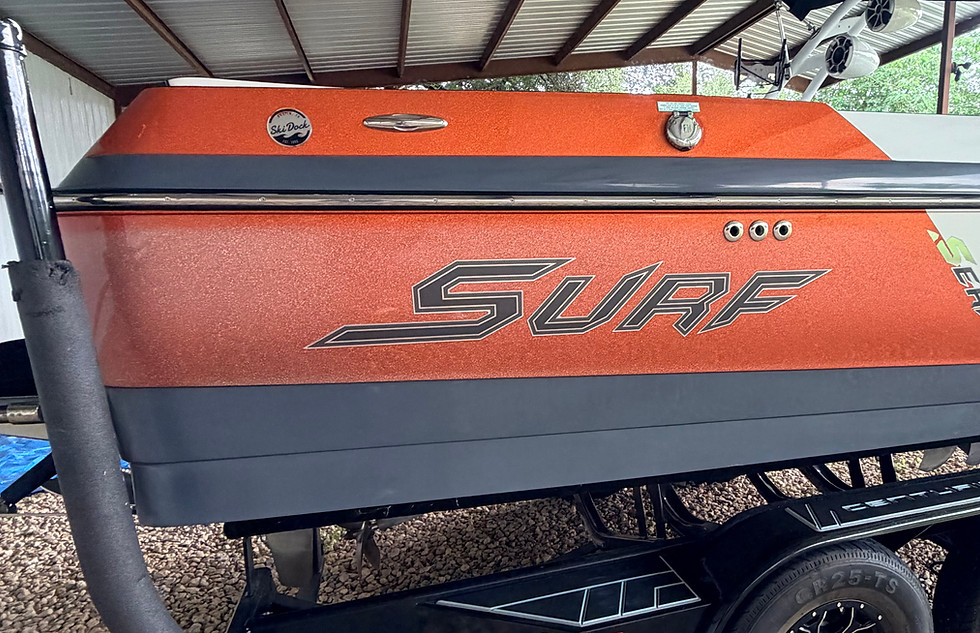
If you clean the boat and it still looks tired afterward, the issue is deeper than dirt. Oxidation removal becomes necessary when soap, rinse-downs, and basic upkeep stop producing noticeable improvement. That is usually because the surface itself needs correction, not just cleaning.

Black streaks, water spots, haze, and uneven color loss often show up alongside oxidation. These issues can make the boat look older and more weathered than it is. If those marks keep coming back or never fully clear up, the surface likely needs a more involved correction process.

When water no longer beads, the finish feels flat, and the surface seems to hold onto every bit of grime, it is often a sign that previous protection is gone and oxidation has started to move in.
« IS IT NECESSARY?
« MYTHS
Common Misconseptions About Marine Oxidation
MYTH
"A basic wash and wax will take care of it"
REALITY
This is probably the most common misunderstanding. Once oxidation has developed, washing the boat and putting a layer of wax on top may improve the look for a short time, but it will not actually remove the damaged surface.

MYTH
"Every boat requires the same correction process"
REALITY
No two boats are exactly alike. The condition of the gelcoat, its age, thickness, previous maintenance, and the severity of oxidation all influence the level of correction required. Some vessels may need straightforward compounding and polishing, while others may require a more advanced process that includes targeted sanding in specific areas.
That’s why we evaluate each vessel individually and tailor the correction process to its condition—using only the level of correction needed to achieve the best possible result.

MYTH
"Correcting oxidation automatically damages the gelcoat"
REALITY
Properly performed oxidation removal is designed to improve the finish while minimizing unnecessary material removal. The goal is not to aggressively chase perfection at any cost. It is to assess the condition of the gelcoat and use the least aggressive combination of compounding, polishing, and sanding necessary to achieve the desired result.
When performed correctly, controlled correction can restore the appearance of the finish while preserving as much of the remaining gelcoat as possible.

"Once the oxidation is removed, it will not come back"
MYTH
REALITY
Oxidation removal restores the appearance of the gelcoat, but it does not make the surface immune to future UV exposure, water, and environmental elements. Without proper protection and ongoing maintenance, the finish can begin to oxidize and fade again over time.
Correction restores the finish. Protection and maintenance help preserve it.

MYTH
"Removing oxidation will make any boat look like new again"
REALITY
Oxidation removal can make a dramatic difference in the appearance of a boat, but every finish has its limits. Heavily worn or damaged gelcoat, deep defects, and surfaces that have been overworked in the past may not be fully reversible through detailing alone.
What professional correction can do is maximize the condition of the existing finish—restoring as much gloss, clarity, depth, and uniformity as the gelcoat will allow.


